Android's VPN lockdown mode is meant to keep your traffic secure, even if the VPN app crashes. But a newly discovered flaw in Android 16, dubbed Tiny UDP Cannon, can trick that feature into leaking small bursts of data—and potentially your real IP address. While Google reportedly decided not to patch the issue, the privacy-focused GrapheneOS stepped in with a fix. Here’s everything you need to know about the vulnerability and how GrapheneOS closes the loop.
What Is the Tiny UDP Cannon Vulnerability?
The Tiny UDP Cannon is a security bug affecting Android 16 that allows a regular app to send a small amount of data outside an active VPN tunnel. Security researcher lowlevel/Yusuf discovered and disclosed the flaw. The name comes from the way the exploit fires tiny UDP packets that bypass the VPN’s routing rules. Under normal conditions, Android’s VPN lockdown mode should block all traffic if the VPN connection drops. However, Tiny UDP Cannon exploits a loophole: it can craft packets that the kernel mistakenly sends through the default network interface instead of the VPN tunnel. Even though only a few bytes leak per attempt, in an extreme case an attacker could use repeated bursts to determine your true IP address, defeating the entire purpose of using a VPN.
How Does the Leak Work in Practice?
The bug exploits how Android handles UDP packets when a VPN is active. Normally, the VPN lockdown mode forces all traffic to go through the VPN interface. But Tiny UDP Cannon sends specially formed UDP datagrams that the kernel routes to the physical network interface (like Wi‑Fi or mobile data) instead. The leaked packets are tiny—often just a few bytes—but they can contain the source IP address of the device. Because the leak happens outside the VPN tunnel, any server receiving those packets sees the real IP. An attacker could use a technique like DNS rebinding or run a malicious app on the same device to capture these packets. In practice, this means even with VPN lockdown enabled, your true location could be exposed if an app exploits this flaw.
Why Did Google Choose Not to Fix It?
According to reports, Google engineers decided not to patch the Tiny UDP Cannon vulnerability in Android 16. The company likely deemed the risk low because the leak only sends minuscule amounts of data—far from a full traffic exposure. Additionally, Android’s own safety mechanisms might seem adequate to most users: the VPN lockdown mode works correctly for all normal traffic, and the leak only happens under specific, crafted conditions. Google may have also been concerned that a heavy‑handed fix could break compatibility with legitimate UDP‑based apps or degrade performance. However, for privacy‑conscious users and those relying on VPNs to hide their IP address, even a small leak is unacceptable. GrapheneOS argued that the flaw undermines the very promise of VPN lockdown and stepped in where Google would not.
What Is GrapheneOS’s Fix for This Bug?
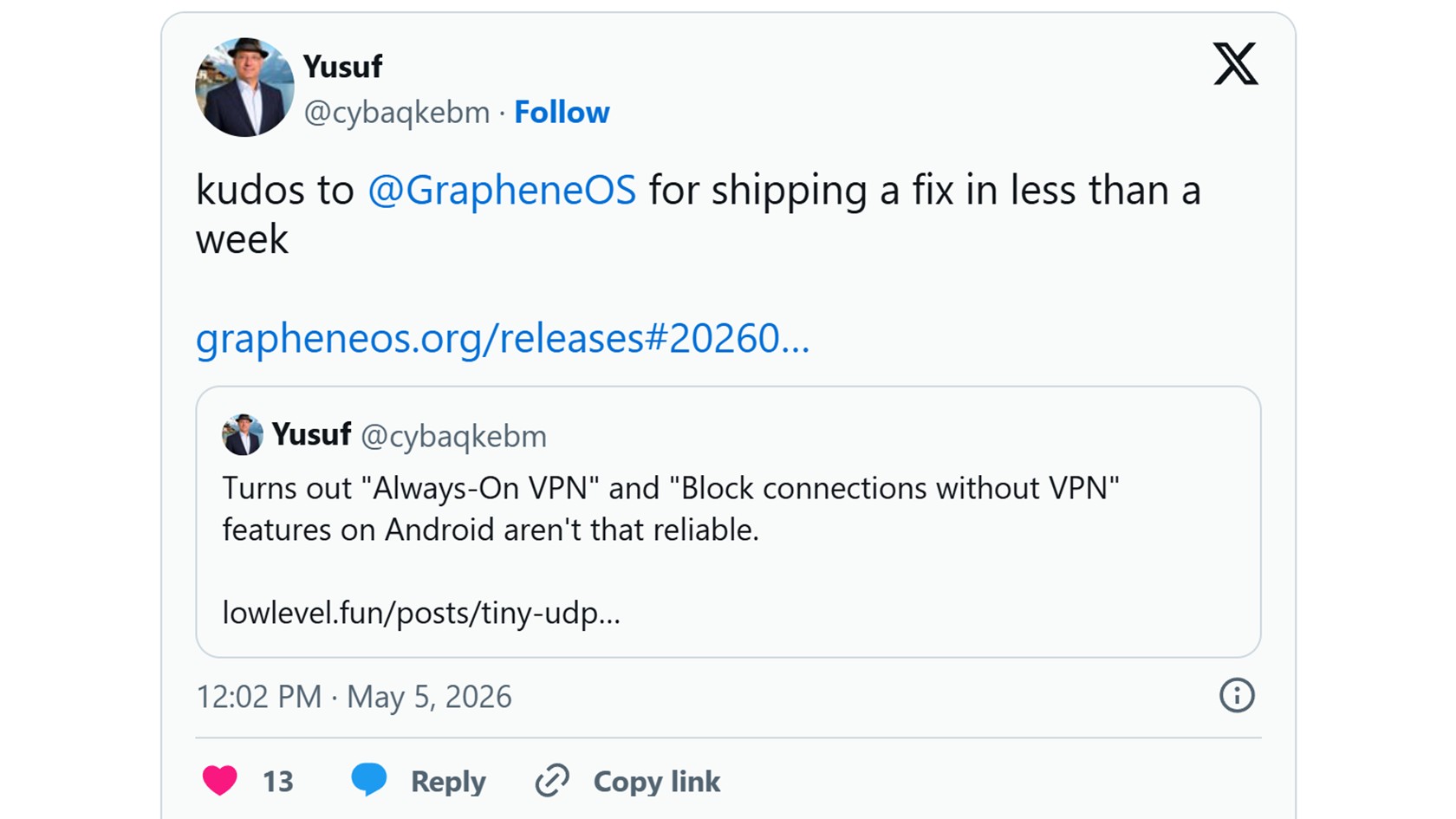
GrapheneOS, a security‑hardened version of Android, has already implemented a patch for the Tiny UDP Cannon vulnerability. The fix modifies the kernel’s routing rules so that all UDP packets—regardless of size or origin—must go through the active VPN interface when lockdown mode is enabled. By closing the loophole that allowed crafted packets to bypass the VPN, GrapheneOS ensures that even the smallest data leak cannot occur. The patch is included in the latest GrapheneOS builds for devices like the Google Pixel series. Users on stock Android 16 will remain vulnerable unless Google changes its stance and releases an update. GrapheneOS’s proactive approach highlights its commitment to privacy and security, often fixing issues that larger vendors overlook.
Does Android’s Lockdown Mode Still Offer Protection?
Yes and no. Android’s VPN lockdown mode was designed to block all non‑VPN traffic when the VPN service stops unexpectedly. For everyday use, it works as intended—if your VPN app crashes, no data leaks out. However, the Tiny UDP Cannon shows that the mode isn’t bulletproof against deliberate exploits. The vulnerability allows a malicious app to trick the system into sending a few bytes outside the tunnel even while lockdown is active. So if you’re using stock Android 16 and a compromised app targets this bug, your real IP could be exposed. GrapheneOS users with the patch are fully protected. The bottom line: lockdown mode is still valuable, but it’s not a silver bullet against all VPN bypass attacks.
Should Stock Android Users Be Worried?
The risk to the average user is relatively low. The Tiny UDP Cannon requires a malicious app to be installed on your device, and the leaked data is minimal—usually just a few bytes. Most people won’t have a targeted attacker running such an app. However, if you rely on a VPN to protect your privacy from advertisers, ISPs, or network snoops, even a small leak can be a concern. Journalists, activists, or anyone needing strong anonymity should take this seriously. Until Google issues a fix, stock Android users can minimize risk by using only trusted apps, keeping their device updated with the latest security patches, and considering a switch to GrapheneOS or a similar hardened OS. Also, using a VPN with built‑in DNS leak protection adds another layer of defense.
How Can You Check if You’re Affected?
To test if your device is vulnerable to the Tiny UDP Cannon, you can try a network monitoring tool like tcpdump or a dedicated leak‑testing app (from a reputable source). Set up your VPN with lockdown mode enabled, then run a scan that attempts to send small UDP packets. If any traffic appears on your physical network interface (Wi‑Fi or mobile data) and not through the VPN tunnel, you’re affected. Alternatively, use an online IP leak test while mimicking the exploit. Keep in mind that the bug only triggers with specially crafted packets, so standard VPN leak tests may not catch it. For most users, the safest bet is to run a security‑focused OS like GrapheneOS or wait for an official Android security update. Always verify the source of any testing tools to avoid installing malware.