Introduction
In a recent LinkedIn post, Trevor Milton — the convicted fraudster and former CEO of Nikola Motors — launched a detailed critique of the Tesla Semi's economic viability. Despite his heavily tarnished credibility, a handful of his arguments actually present legitimate challenges that the electric truck industry must address. This article examines Milton's claims, separates fact from fiction, and explores what they mean for the future of heavy-duty electric trucks.
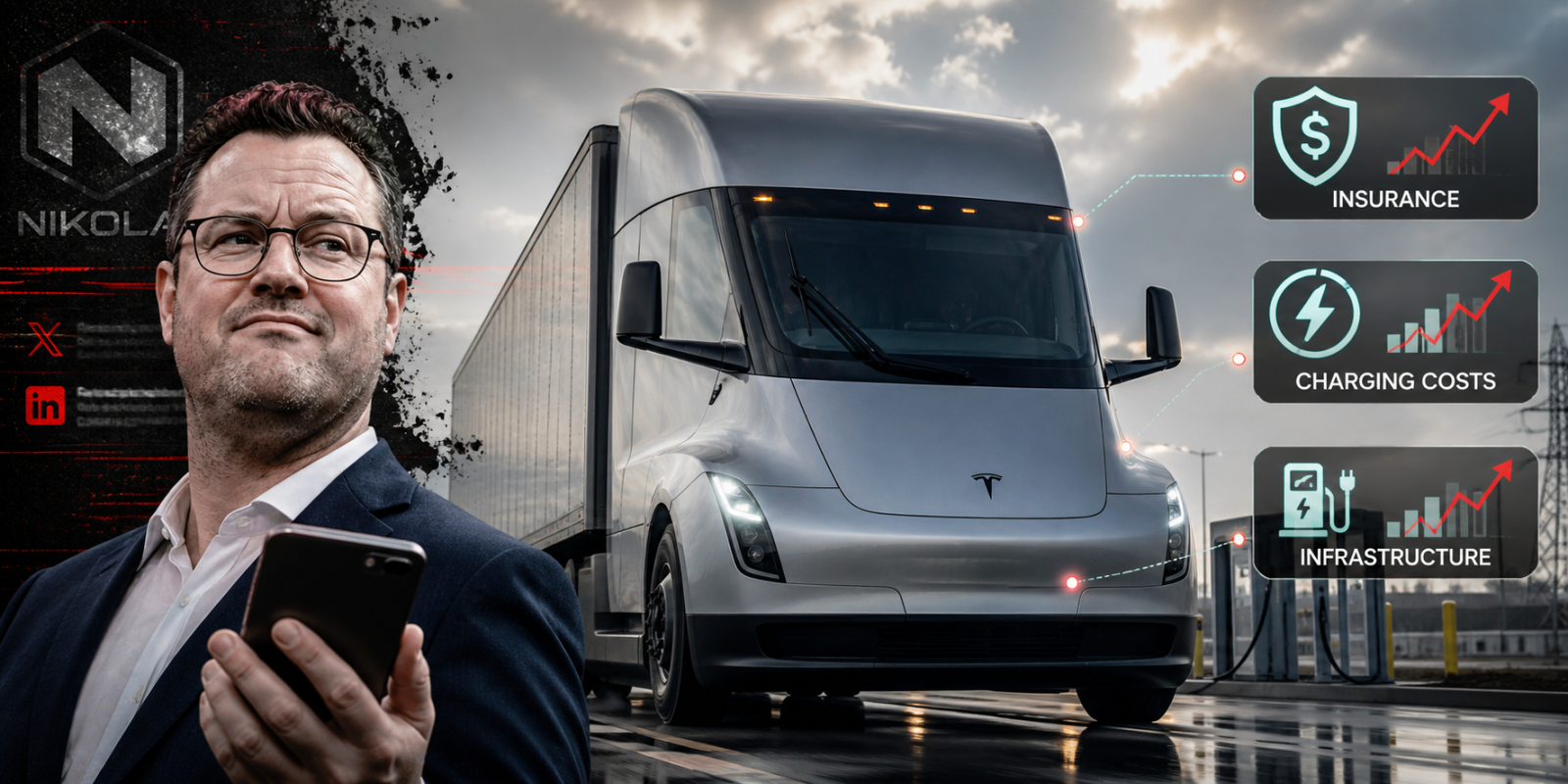
Who Is Trevor Milton and Why Does His Opinion Matter?
Trevor Milton founded Nikola Motors in 2014 with grand promises of a hydrogen fuel cell and battery-electric truck empire. However, in 2022 he was convicted of securities fraud for systematically lying to investors about the company's technology, including a viral video that showed a non-functioning truck rolling downhill. His conviction and the subsequent collapse of Nikola's stock have made him a highly controversial figure. When he speaks, the stigma of fraud follows. Yet, as the adage goes, even a broken clock is right twice a day — and Milton's background as an early mover in the EV truck space gives him unique insight into its economics.
Milton's Key Arguments Against the Tesla Semi
Milton's LinkedIn post, which he claims comes from someone who 'knows EV trucking probably better than anyone,' targeted several core aspects of the Tesla Semi program. Below are the main points he raised, along with an assessment of their validity.
1. Battery Costs and Payload Penalty
Milton argues that the Tesla Semi's massive battery pack — reportedly around 800–1000 kWh — adds significant weight, reducing payload capacity compared to a diesel truck. This is a well-known challenge for all heavy-duty EVs. For long-haul routes, carrying a heavy battery means less revenue per trip. While Tesla claims improvements in energy density and lighter materials, the physics are clear: a truck carrying its own fuel source must sacrifice cargo weight. Verdict: Valid concern. Even industry analysts acknowledge that Class 8 EVs are best suited for regional routes, not transcontinental hauls, until battery technology advances significantly.
2. Charging Infrastructure and Downtime
Milton points out that the Tesla Semi requires high-power Megachargers (over 1 MW) that are still scarce. He questions whether Tesla can deploy enough chargers to support a large fleet without causing operational downtime. This argument has merit. Building charging infrastructure for trucks is vastly different from passenger cars — trucks need pull-through stations, high power grids, and logistics for multiple vehicles charging simultaneously. Tesla has announced plans for Megacharger networks, but deployment speed remains uncertain. Verdict: Valid concern. Competitors like Daimler and Volvo are also grappling with similar infrastructure gaps.
3. Total Cost of Ownership (TCO) Calculations
Milton contends that Tesla's advertised TCO advantages are based on optimistic assumptions about electricity prices, maintenance savings, and incentives. He argues that real-world conditions — such as fluctuating energy costs and higher tire wear due to weight — can erode these savings. While Tesla's TCO models are generally favorable for fleet operators, independent studies by the Department of Energy and consulting firms confirm that EV trucks can indeed offer lower operating costs per mile, but only when utilization is high and charging is optimized. Milton's skepticism about the assumptions is not unfounded, but it doesn't invalidate the broader trend. Verdict: Partially valid. The math works in many scenarios, but fleets must verify with their own data.

4. Reliability and Warranty Risks
Milton highlights that the Tesla Semi uses new technology (e.g., high-voltage systems, regenerative braking on a heavy vehicle) that may have unforeseen reliability issues. He also questions whether Tesla's warranty terms will be sufficient to cover major battery replacements. As a startup automaker, Tesla has a mixed track record with vehicle quality, though its electric powertrains have proven reliable in cars. For commercial trucks, downtime is extremely costly, so reliability is paramount. Verdict: Valid concern. Long-term data on Tesla Semi reliability is not yet available, so this remains an unknown.
Separating the Wheat from the Chaff
While Milton's points carry weight, his credibility is severely undermined by his own fraudulent history. He has a vested interest in discrediting Tesla's success, given that Nikola failed to deliver similar products. Moreover, some of his claims cherry-pick data or ignore Tesla's advantages, such as its vertical integration, in-house battery production, and continuous over-the-air software updates. The trucking industry should evaluate Tesla Semi on its own merits, not based on the attacker's reputation. However, ignoring legitimate criticism because of its source would be a mistake. Fleet operators would be wise to consider all these factors when making purchasing decisions.
The Bigger Picture for Electric Trucking
The debate over the Tesla Semi is part of a larger conversation about the future of freight transport. Regulatory pressure (such as California's Advanced Clean Trucks rule) is pushing fleets toward zero-emission vehicles, but the technology is still evolving. Milton's critique underscores the need for more rigorous third-party testing, transparent TCO calculators, and a realistic timeline for infrastructure buildout. Tesla's Semi is not a magic bullet, but it is a necessary step in the transition. Other manufacturers like Freightliner eCascadia and Volvo VNR Electric face similar hurdles, so the industry must collaborate to overcome them.
Conclusion
Trevor Milton's LinkedIn attack on the Tesla Semi contains several valid points regarding battery weight, charging infrastructure, and TCO uncertainties. However, his status as a convicted fraudster means these arguments should be taken with a grain of salt and verified through independent research. For the trucking industry, the takeaway is that electric trucks are promising but not yet a perfect replacement for diesel in every application. The road ahead requires honest discussions about trade-offs, and even if the messenger is flawed, the message can still be valuable.